Updated · View the original (2020)
Photo Ready: 11 Decluttering Tips to Prep Your Home for a Listing Shoot
Your eye is kind to your own home. It edits out the charging cables on the counter, the stack of mail by the door, the row of shampoo bottles in the shower, because you stopped seeing them years ago. A camera has no such mercy. It records every object in the frame with the same clarity as the granite and the light, and a buyer scrolling a listing at eleven at night reads all of it in half a second. Decluttering is not housekeeping. It is the single highest-return thing you can do to a home before the photographer arrives, because it decides what the lens actually captures.
The stakes are easy to underrate. In the National Association of REALTORS Profile of Home Buyers and Sellers, buyers rank photographs as the single most valuable feature of a listing website, ahead of detailed property information and floor plans. Those photos are where a decluttered home pays off or a cluttered one quietly loses showings. Redfin found that homes between $200,000 and $1 million shot with a professional camera sold for $3,400 to $11,200 more relative to list price than comparable homes with amateur photos. No photographer, however good, can deliver that edge if the rooms are full of things that pull the eye away from the house.
This guide is written for the person deciding how a Texas property gets presented: the agent prepping a seller, or the seller doing the work. Walk your home the way a stranger would, room by room, and treat everything below as the checklist you run before the shoot. The goal is not an empty house. It is a home that photographs like the buyer could move in tomorrow.
1. Start at the curb, because it is your thumbnail
The exterior of your home is almost always the first photo in the gallery and the image that decides whether a buyer clicks at all. Everything a camera can see from the street either invites them in or gives them a reason to keep scrolling. Start by clearing the visual noise: garbage cans, garden hoses, the portable basketball hoop, kids' bikes, and any car parked in the drive or at the curb in front of the house. Those objects date a photo and clutter a frame that should read clean and calm.
Then handle the living detail the lens exaggerates. Mow and edge the lawn, trim the shrubs, mulch the beds, and pull the weeds coming up through cracks in the driveway and walk. Sweep away leaves and clippings, and knock down cobwebs and wasp nests around the porch and eaves, because they photograph as neglect. Take down flags, banners, and anything advertising a club, a team, or a cause, since the point is to help every buyer picture themselves here, not to learn about you. A power wash of the drive, walk, and siding, a freshly painted front door, and clean, legible house numbers cost little and read as a home that has been cared for. That impression carries into every interior shot that follows.
2. Don't forget the back and side yards
In Texas, outdoor living is part of the sale, so the backyard earns real gallery space, and the camera will find whatever you leave out there. Clear pet waste and toys, rake and mow, trim the beds, and put away hoses, sprinklers, chemicals, the pool vacuum, and cleaning supplies. If there is a pool or hot tub, get the water clear and running, because a cloudy pool photographs worse than no pool at all. Arrange the patio furniture as a real seating area and pull cushions that are faded or worn, since sun-bleached fabric reads as tired in a photo even when it is fine in person.
Uncover the grill and wipe it down, and if a portable grill is not conveying, move it out of frame entirely. Check the fence line, clear cobwebs off the back of the house and any shed, and remember the side yards, the strip down the side of the house where trash cans, lawn equipment, and odds and ends quietly collect. Buyers walk that path on a showing and the photographer may shoot it, so it needs to be as clear as the rest.
3. Living and family rooms: depersonalize so buyers can move in
The main living spaces are where a buyer decides whether they can see their own life in the home, and personal history gets in the way of that. Family photos, religious or cultural items, collections, and memorabilia all tell the camera whose house this is, and every one of them is a small reminder to the buyer that it is not theirs. Pack them away before the shoot. A buyer can add their own furniture in their imagination in seconds, but they cannot mentally subtract yours, so this is the moment to edit.
Pare the furniture down to a clean seating arrangement and one complementary table, and move the extra chairs, side tables, and anything shoved into a corner out of the room. A space with room to breathe photographs larger and more designed than one packed to the walls. Clear the mantel to one or two intentional pieces, clean the firebox and hearth of ash and soot, and take down seasonal decorations entirely, since holiday items instantly date a listing and eat visual space. Dust and vacuum last, and leave fresh vacuum lines in the carpet, a small detail that reads as a professionally kept home. If removing furniture leaves a room looking sparse, or the home is vacant, virtual staging can furnish it convincingly from the photos, as long as the listing clearly discloses that the rooms are digitally staged.
4. Kitchen and dining: clear every counter
Counters are the make-or-break surface of a kitchen photo, and buyers read a clear counter as more space and a cluttered one as less. Take everything off: the knife block, the toaster, the paper towels, the mail, the spice rack, the vitamins. Leave one deliberate object at most, a single coffee maker or a bowl of fruit, and put the rest away, not just pushed to the edge of the frame. Wipe every surface and fixture so nothing catches a smudge or a fingerprint under the lights.
The refrigerator deserves its own line. Strip the front and sides completely: magnets, calendars, kids' artwork, photos, receipts, all of it. A covered fridge is one of the fastest tells of an occupied, cluttered home, and a clean one disappears into the room the way it should. Clear the dirty dishes from the sink, wipe grease and fingerprints off the range, microwave, and dishwasher, and move the trash can and any pet bowls out of sight. On the dining table, less is more: a simple bowl or a low floral arrangement anchors the room without crowding it. Remember that buyers open doors on a showing, so the clean look should be real, not staged an inch deep.
5. Bathrooms: strip them back to hotel-clean
Bathrooms photograph best when they look like no one has ever used them, so the target is a clean hotel, not a lived-in family bath. Clear the counters entirely: soap, shampoo, razors, toothbrushes, the hair dryer, every cosmetic. Empty the catch-all on the back of the toilet tank. Those small bottles and tubes photograph as visual static, and a bare, gleaming counter photographs as space and calm.
Take down every towel that is not clean and in perfect shape, and either hang crisp, matching towels or leave the rods empty and wiped down, which often looks more spacious. Pull hampers and dirty clothes out of the room. Make the sink, tub, toilet, and shower spotless, including the glass or the curtain, since water spots and soap scum show clearly under bright light. If there is a window, clean the glass, blinds, and sill, and open them to let daylight in, because natural light is what makes a small bathroom feel bright rather than boxed in.
6. Bedrooms: make them calm and anonymous
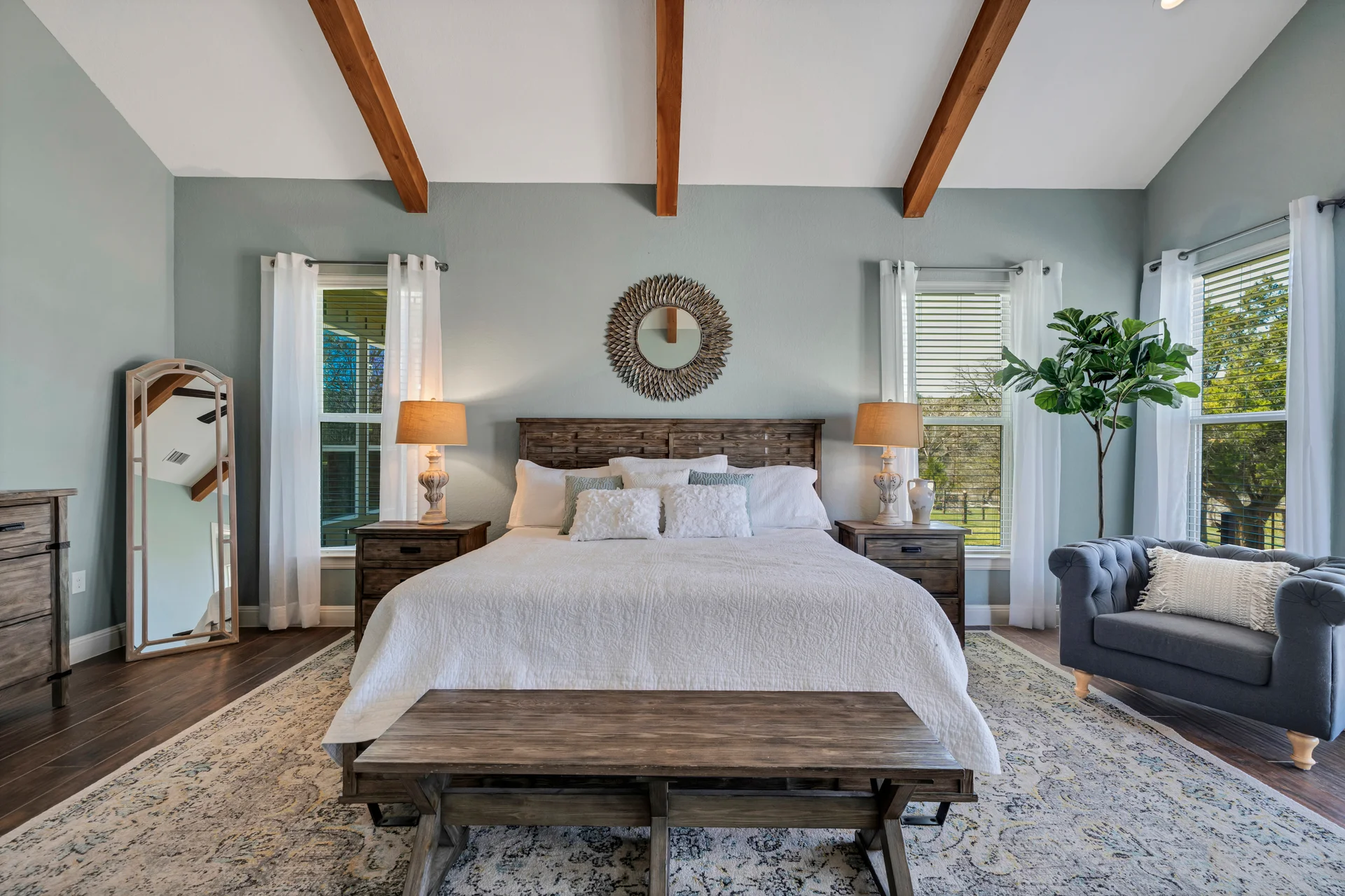
A bedroom should photograph as a place to rest, which means clearing the personal clutter that signals a specific occupant. Take everything off the nightstands, headboard, and dresser tops, pull hampers and clothes out of sight, and make sure nothing is visible under the bed from across the room. Make the beds tight, keep the linens wrinkle-free, and arrange any decorative pillows so the bed reads as the intentional focal point of the shot.
Children's rooms need extra attention, because the camera turns a normal kid's room into busy visual noise. Take personalized name letters, stickers, and posters off the walls, remove over-the-door organizers and toy holders, and keep just one or two toys as accents rather than the whole collection. In a nursery, clear the changing table and put the diaper pail away. Do not skip the closets. Most are not photographed, but a spacious walk-in or a built-in closet system is a genuine selling feature worth shooting, and it only works if the closet is organized rather than piled to the shelf. An orderly closet also signals storage, which is one of the things buyers most want to see.
7. Laundry room: a small space that photographs as a feature
A dedicated laundry room is a real amenity in Texas homes, and buyers look for it, so it is worth photographing well rather than hiding. That only works if it is clear. Wipe the washer and dryer free of water spots and detergent spills, clean the utility sink, and sweep and mop the floor. Put away every container of detergent and dryer sheets, empty any hanging rack, and remove baskets, dirty clothes, spare hangers, and sorting bins.
The room is small, so a little clutter fills the frame fast and makes a functional space read as cramped and disorganized. Cleared and clean, the same room photographs as an orderly, practical feature that adds to the home rather than an afterthought the seller wanted out of view.
8. Garages, storage, and bonus rooms
Buyers use these spaces to answer one quiet question: is there room for my stuff. Most Texas homes are built on slabs rather than basements, so the garage, utility areas, and any bonus or flex room carry that storage story, and a floor buried in boxes tells the wrong version of it. Move the stacked boxes, off-season gear, and overflow into a storage unit for the duration of the listing. Empty floor space is the whole point, because it lets a buyer picture their own boxes, workbench, or second car fitting easily.
Clear cobwebs from the ceiling and corners, sweep the floor, and replace dead bulbs so the space photographs bright rather than dim and cave-like, which is the default look of an under-lit storage area. If your home does have a basement or a large storage room, the same rule applies: clean, empty, and well-lit beats full every time. A bonus room reads best when it shows one clear use, an office, a playroom, a gym, rather than serving as the catch-all for everything without a home.
9. Home office and hobby room: tame the cords and the clutter
Home offices have only grown more important to buyers, but they are also where clutter and cable spaghetti collect, and both photograph badly. Clear the desk down to a clean surface, remove personal paperwork and any sensitive documents, and take away the photos and knick-knacks. Clear the tops of filing cabinets, pick up the floor, and dust the monitors and printer. Then deal with the cords: bundle them, route them behind the desk, and get them out of the frame, because a tangle of visible cables is one of the messiest things a wide-angle lens can capture.
A hobby or craft room follows the same logic. Clear the work tables, put the tools away, and sweep up scraps and debris. Take down personal items like trophies and sports memorabilia, which, like family photos, tie the room to you rather than to the buyer. The aim is a room that reads as a flexible, usable space, not a snapshot of one particular hobby.
10. Then clean everything, because the camera sees it all
Once the home is decluttered, a deep clean is what separates a good gallery from a great one, because high-resolution photography reveals what casual glances miss. Dust the ceiling fans and light fixtures, clean the mildew off bathroom ceilings, and wash the floors. Clean the windows inside and out and wipe the casings and sills, since dirty glass dulls the natural light the whole photo depends on and can show as streaks in the shot. Pull small throw rugs to give floors a continuous, open look, and wipe water spots off every faucet.
Handle the details a wide lens picks up from across a room. Turn off televisions and computer screens and dust them, since a black screen with a dust film or a glaring reflection draws the eye straight to it. Coil and hide cables, remove game controllers, straighten bookshelves so they look tidy but not overstuffed, and clear stacks of magazines, mail, and books. Take out booster seats and high chairs, and straighten the furniture. Then handle the pets: remove crates, bowls, food, litter boxes, and toys, and run a lint roller over the furniture, because pet hair on upholstery shows clearly in a sharp photo even when you have stopped noticing it.
11. Small upgrades that photograph bigger than they cost
Decluttering sets the stage, and a few targeted upgrades let the home photograph at its best. Ask your agent where the money actually moves the needle, because it is usually less than sellers expect. Swapping dated cabinet hardware, updating a tired light fixture, and painting rooms in a neutral color that reads clean and bright on camera are small changes that lift every photo taken in that space. Neutral walls also give a buyer a blank canvas instead of a color they have to imagine painting over.
Get the lighting right before the shoot, since it shapes the mood of every interior frame. Replace every burned-out bulb and, just as important, match the color temperature throughout, so one room does not glow orange while the next reads cold and blue. Mismatched bulbs are a common and avoidable flaw that a photographer then has to correct in editing. If flooring genuinely needs replacing, ask your agent what buyers in your market respond to now rather than assuming a like-for-like swap. These are the finishing touches that make a home look considered rather than merely tidy.
The payoff: a home that photographs like it's already sold
Every tip here comes back to one idea. The camera captures exactly what is in front of it, so the work of preparing a home for sale is really the work of controlling what the lens sees. A decluttered, depersonalized, spotless home gives the photographer clean rooms, honest space, and uninterrupted light to work with, and that is what turns a scroll into a showing. The effort compounds too: staged, well-prepared homes spend up to 73% less time on the market than cluttered ones, and buyers are far more likely to book a tour when a listing feels open and cared for. Pair that prepared home with a floor plan, which Zillow found makes 81% of buyers more likely to tour, and the gallery does the selling before anyone drives over.
When the house is ready, the photography is what carries it to every buyer scrolling online. See how we shoot Texas real estate, and the standard we hold across every market we cover.