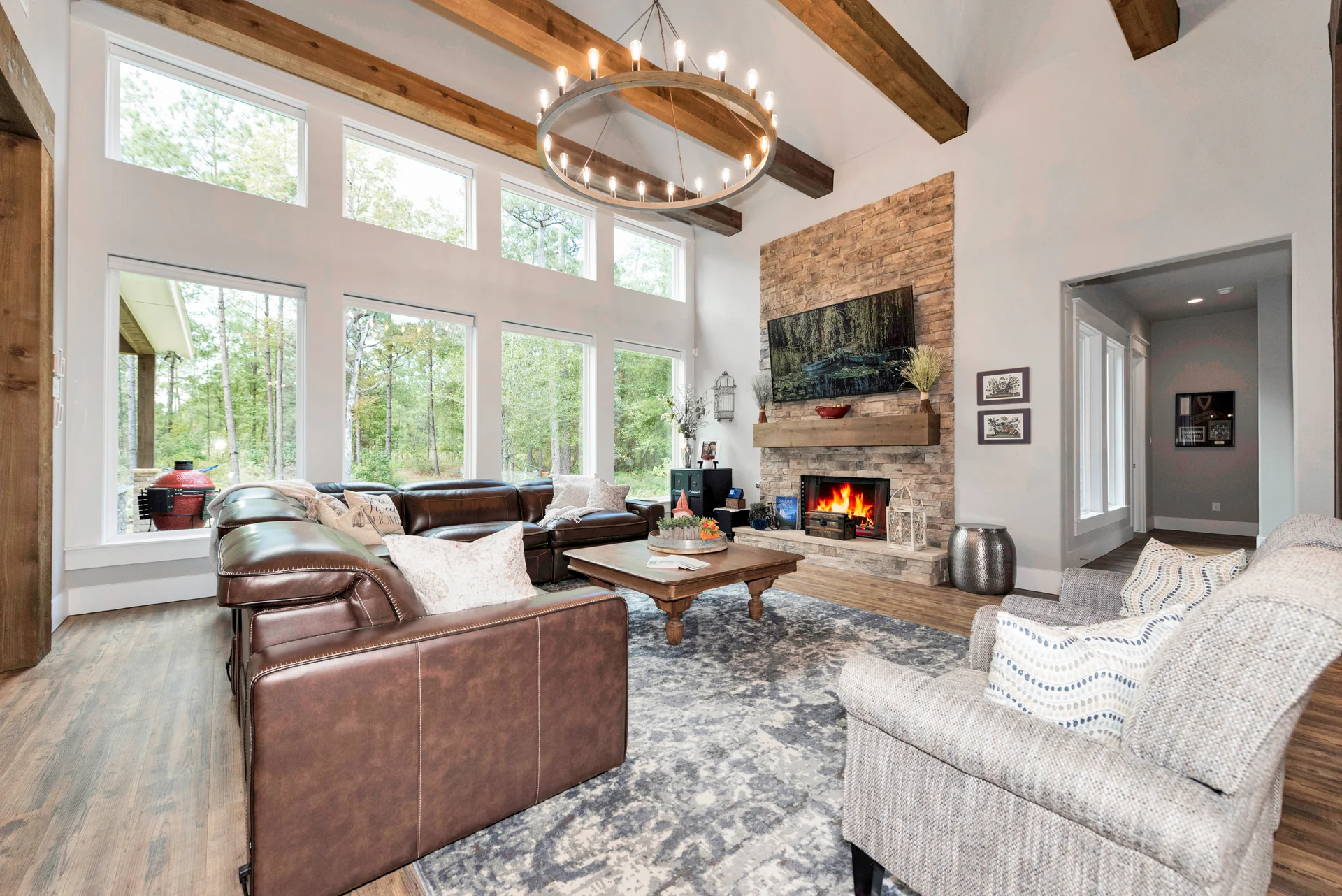
Updated · View the original (2020)
Selling Your Home? 10 Reasons Professional Real Estate Photos Are Essential to the Sale
When you list your home, you are not selling a house so much as selling the first photograph of it. Long before a buyer reads your price, your square footage, or a single line of the description, they react to one image: the thumbnail in the search grid. That reaction, made in about the time it takes to swipe, decides whether your home gets a closer look or gets scrolled past for good. Everything you hope the sale will do for you rides on it.
That is why the choice of who photographs your home is one of the highest-stakes decisions in the whole process. Redfin found that homes between $200,000 and $1 million photographed with a professional camera sold for $3,400 to $11,200 more relative to their list price than comparable homes shot with amateur photos. Set against the cost of a shoot, that gap is not close. Here are ten reasons professional real estate photography is essential when your own money is on the line, and why each one matters more today than it did a few years ago.
1. Your photos are the only first impression most buyers get
Almost every buyer meets your home online first. In NAR's Profile of Home Buyers and Sellers, searching online is the single most common first step buyers take, and photos rank as the most valuable thing they find on a listing. For most of the people who will decide your home's fate, the gallery is the showing. They form an opinion from it and rarely revise that opinion later.
This is your digital curb appeal, and buyers read it as a proxy for the home itself. A bright, crisp, well-composed set signals a home that has been cared for and priced with seriousness. A handful of dim, tilted phone snapshots signals the opposite, fairly or not, and that impression colors everything a buyer sees afterward. You get one first impression of your home, it happens on a screen, and you do not get it back.
2. Professional photos win the click and widen your buyer pool
On the search grid, your home sits shoulder to shoulder with a dozen others at your price point, each reduced to a single lead image. The photo that stops the scroll wins the click, and the click is everything: it is the only way a buyer ever reaches your description, your features, or the button to book a showing. A weak lead image does not just underperform. It quietly removes your home from consideration for buyers who never learned it existed.
The portals compound this. Listings that hold attention get shown to more people, and listings that get skipped get buried. A strong gallery therefore does two jobs at once: it pulls more buyers in directly, and it earns the engagement that pushes your home higher in front of the next wave. Wider reach is not vanity. A bigger pool of interested buyers is exactly what protects your price when it comes time to negotiate.
3. A well-shot listing sells faster
Time on market is not a neutral clock. Buyers watch how long a home has been listed, and a listing that lingers reads as damaged goods, prompting the lowball offers and price-cut questions every seller dreads. The best defense is a strong start, because a fresh listing gets its largest burst of portal exposure in the first days. Professional photography makes that burst count by converting attention into saved listings and booked showings while the spotlight is brightest.
Immersive media accelerates it further. Matterport's analysis of MLS transactions found that listings with a 3D tour sold up to 31% faster and for up to 9% more. The reason is simple: a buyer who has already walked your home online arrives at the showing closer to a decision, and relocation buyers moving to Texas from out of state can act without a first in-person visit at all. Fewer weeks on the market means less disruption to your life and less pressure to discount.
4. In your price bracket, buyers now expect this
There is an old warning against doing something just because everyone else does. Home selling is the exception. Depending on where your home sits, most or all of the comparable listings a buyer scrolls past on the way to yours will have professional photography. Against that backdrop, amateur photos do not read as thrifty. They read as a home that is either neglected or hiding something, and buyers move on to the listing that looks the part.
The flip side is real leverage. In a lower price bracket where sellers still cut corners, professional imagery lets your home stand a full head above the grid and capture attention that competitors are leaving on the table. Either way, presentation is now the baseline buyers measure you against, not a bonus. Matching it is the price of being taken seriously, and beating it is how you get chosen first.
5. Great photography sells the feeling of living there
Buyers do not fall for square footage. They fall for a life they can picture themselves living, and photography is where that picture is either created or lost. A sterile, cluttered, or badly lit room shows what is physically present. A thoughtfully presented room invites a buyer to imagine their morning coffee at that window, their family around that table, their evenings on that porch. That emotional pull is what turns a browser into someone who has to see the home in person.
Presentation is central to it. The Real Estate Staging Association reports that staged homes spend up to 73% less time on the market than non-staged listings, and photography is where staging either pays off or disappears. Buyers can add furniture in their imagination, but they cannot mentally subtract someone else's clutter. A professional knows what the camera rewards: cleared surfaces, a chair turned toward the light, room to breathe. When your home is vacant, virtual staging can furnish empty rooms convincingly, as long as it is clearly disclosed as digitally furnished, so buyers feel the space instead of an echo.
6. Getting the light and the angles right is harder than it looks
Anyone can photograph a puppy. Photographing a room well is genuinely difficult, and it is where do-it-yourself galleries fall apart. Interiors force the camera to hold two things at once that a phone cannot: a bright window and the room around it. Point a phone at your living room and you get one of two failures, a glowing white rectangle where the view should be, or a correctly exposed window over a room gone dark and grim. Neither looks the way the room feels when you stand in it, and buyers sense the wrongness even when they cannot name it.
Angles are the other half. A professional keeps verticals true and shoots each room from the position that shows it largest and most honestly, without tipping into the ultra-wide distortion that balloons a bedroom online and then disappoints the buyer at the door. That gap, between a room that looks inviting and one that looks cramped or fake, is decided by judgment built over thousands of homes, captured in a single well-run real estate photography shoot rather than a frustrating afternoon of retakes. For a home that shows beautifully at dusk, a twilight photograph, with warm interior glow against a deep blue Texas sky, is the most reliable scroll-stopper in the business.
7. The photos on your listing are made in the edit, not just the shoot
When a professional photographs your home, they capture far more frames than will ever appear online. The value is in what happens next. Like a curator building an exhibit, the photographer selects the handful of images that tell the strongest, truest story of your home and sequences them into a walk a buyer can follow. Then each frame is finished: white balance corrected so a lamp-lit room does not turn orange, verticals straightened, sensor dust cleaned, and the whole set color-matched so the gallery feels like one coherent home rather than twenty different ones.
Done well, that work is invisible and it is exactly what you are paying for. It is also where honesty matters, because there is a bright line between finishing a photo and faking one. Correcting light and color is craft. Erasing a neighbor's roofline, deleting power lines, or using AI to add a feature that is not there crosses into misrepresentation, and the rules have tightened around it. A growing number of states now require digitally altered listing photos to be disclosed and marked, with California's Assembly Bill 723 among the most prominent examples. A professional who does this for a living knows exactly where that line sits and keeps your sale on the right side of it, which protects you long after closing.
8. More eyes become more offers, and offers become leverage
Faster is only half the return. The same imagery that pulls a bigger audience also builds the competition that holds your price up. More clicks bring more showings, more showings bring more offers, and multiple offers are the only thing that reliably moves a sale price above the ask. That chain is precisely what the Redfin dollar figures reflect: professional photos do not add value by magic, they add it by enlarging the pool of buyers competing for your home.
The reverse chain is just as real, and it runs the wrong way. Amateur photos mean fewer clicks, fewer showings, fewer offers, and a listing that eventually needs a price reduction to regain the attention the gallery failed to earn. A price cut is a permanent, public discount you take because the marketing came up short. Strong photography is the far cheaper way to reach the same buyers, on the front end, while your home is still fresh and your negotiating position is strongest.
9. Doing it yourself costs far more than it saves
Selling a home is already one of the most stressful things most people go through. You may be tying down financing on the next place, coordinating a move, and keeping the house showing-ready every single day. Adding a photo shoot to that list is not a saving, it is one more job you are not equipped to do well, done at the worst possible time. The hours spent wrestling with exposures and reshooting a dim kitchen are hours you do not have to spare.
The equipment argument seals it. Real work here calls for a full-frame camera, a corrected wide lens, a sturdy tripod, and off-camera flash, easily thousands of dollars of gear bought for a single afternoon, and the gear is the easy part next to knowing how to use it in a north-facing room at four in the afternoon. When you hire a professional, you rent both the equipment and the judgment that drives it for a fraction of what either is worth, and you buy back your own time and peace of mind in the bargain. On the highest-leverage marketing decision of your sale, cutting this corner is the false economy that ends up costing you the most.
10. A professional delivers the full media set buyers now explore
Stills alone are no longer a complete listing. Today's buyers expect to explore a home from the couch before they ever drive to it, and the listings that give them the full toolkit are the ones that win the relocation and out-of-town buyers so common across Texas. A professional shoot captures all of it in one coordinated visit, consistently lit and color-matched, rather than stitched together from three different sources later.
That toolkit is deep. NAR reports that 52% of agents now use drone imagery, and aerial photography is what shows a buyer your lot, your setback, and the neighborhood around it. Google and NAR's research found that roughly 70% of home shoppers use video to tour a home, so video that gives your home motion and story is no longer optional at the top of the market. A Matterport 3D tour lets a buyer walk your home at midnight from another state, and a floor plan, which Zillow found makes 81% of buyers more likely to tour, answers the one question photos cannot: how the rooms connect. One practical note on the drone, flying commercially requires an FAA Part 107 certificate, so that piece has to be handled by a licensed operator, not a hobbyist.
Choosing the right photographer for your sale
If you are hiring the work yourself rather than leaving it to your agent, put some care into the choice. Look for a specialist with a portfolio of real estate work specifically, not a wedding or portrait photographer picking up side jobs, because interiors demand their own equipment and technique. Confirm the basics: licensed and insured, and Part 107 certified if drone imagery is part of the plan. Be wary of the deep discount, since this is the one line item in your sale where cutting cost tends to cut the result. And favor someone whose galleries look consistently strong across every listing, not just the easy ones, because consistency is the real mark of experience.
Underneath all ten reasons is a single truth: your listing photos are the cheapest lever you have on both how fast your home sells and what it finally sells for, and they are the first thing every buyer judges. That is not a place to improvise. See how we shoot Texas real estate, and the standard we hold across every market we cover.